Frost heave vs. slope creep on a pipeline corridor: how to tell them apart
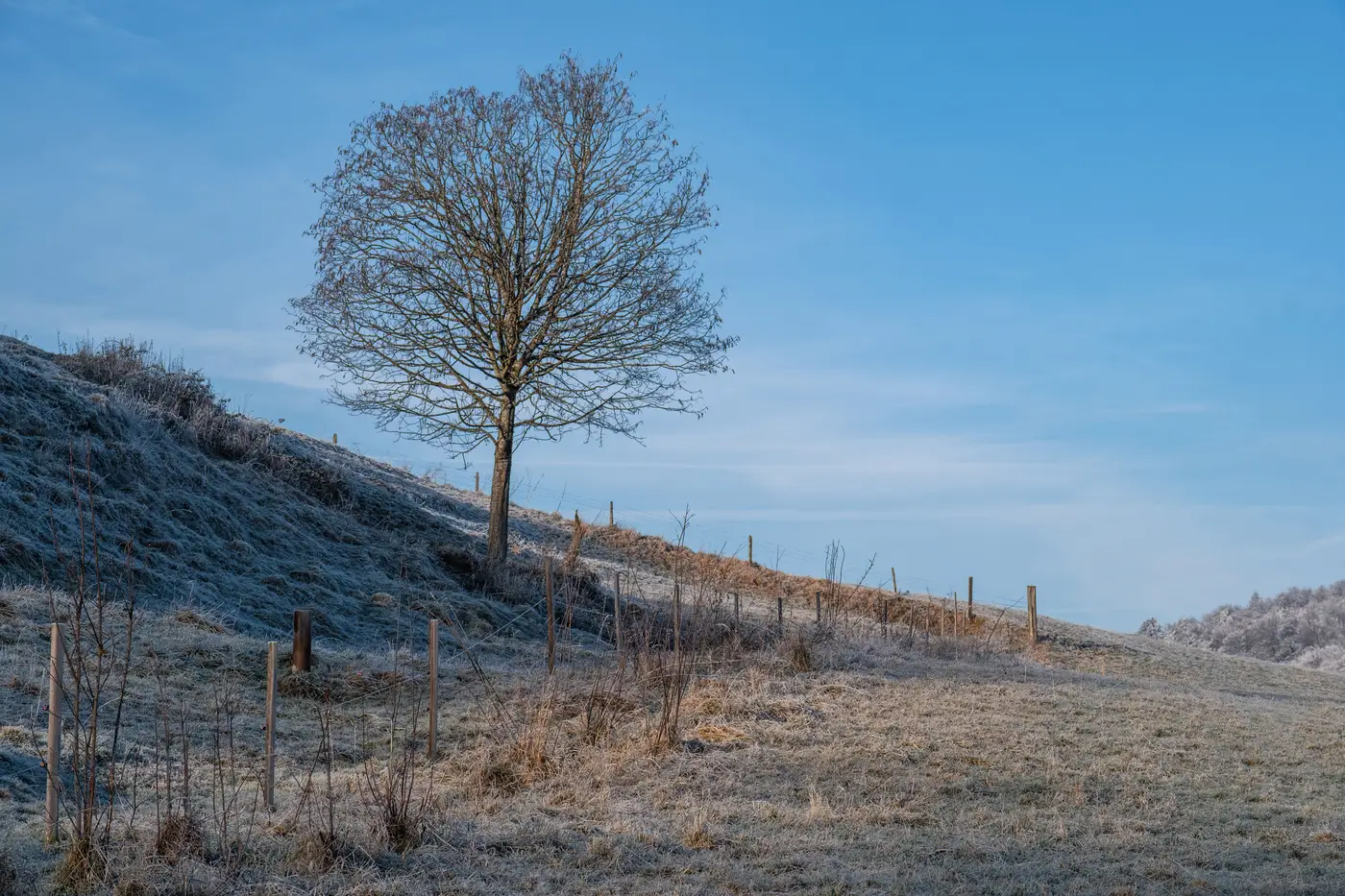
A landowner calls about a bump in the right-of-way. A field tech notices a fence line out of alignment near a steep cutbank. Both get logged as "ground movement," and both get treated the same way in a lot of integrity programs: send someone to look, write it up, move on. But frost heave and slope creep are different mechanisms with different timelines, different triggers, and different implications for where you put a geotech crew first.
What frost heave actually looks like
Frost heave is a freeze-thaw story. Water in frost-susceptible soil, usually silts and some clays, migrates toward the freezing front and forms ice lenses. The ground lifts. When the lenses melt out in spring, it settles back down, though not always to exactly where it started. The signature is seasonal and often cyclical: you'll see the same locations heave and subside year after year, roughly matched to the frost calendar for that latitude and soil type.
On a corridor, frost heave tends to cluster where you'd expect: poorly drained low spots, north-facing slopes that hold frost longer, areas near culverts or water crossings where soil moisture stays high into freeze-up. Pipe strain from frost heave is usually a differential loading problem, concentrated at the transition between frozen and unfrozen ground.
What slope creep looks like
Slope creep doesn't reverse. It's a slow, generally downslope displacement of the soil mass, sometimes a few centimeters a year, sometimes faster after a wet season, and it accumulates. Tension cracks open at the head of the slope. The toe can bulge or show hummocky ground. Trees on an active creep slope often show that characteristic curve at the base, where the trunk has been pushed over slowly enough for the tree to keep growing upright above it.
Creep is triggered by precipitation, groundwater, and slope geometry more than by the freeze-thaw calendar, though saturated soil freezing and thawing can contribute to the mechanism on marginal slopes. That's part of why the two get confused in the field. A slope that's actively creeping can also heave seasonally on top of the creep signal, and untangling which movement is doing what to the pipe takes more than one site visit.
The tell that actually separates them
Directionality and seasonality are the two questions worth asking before anything else:
- Does the ground return close to its original position after thaw, or does it keep going the same direction year over year? Reversal points to heave; accumulation points to creep.
- Is the movement tied to a specific slope orientation and steep terrain, or is it showing up on flat and gently sloped ground near drainage features? Creep wants a slope. Heave doesn't need one.
- Did the movement track with a hard freeze-thaw cycle, or with a wet spring and saturated soils regardless of temperature? That's usually the fastest way to separate the two causes in a field report.
A geotech still has to walk the ground and pull soil samples to confirm the mechanism. Elevation differencing over a corridor tells you where the ground has moved between two dates, flagging the segments worth that site visit instead of asking a crew to walk or fly the whole right-of-way looking for a signal that might only show up at certain points in the freeze-thaw cycle. Our annual screening pass across a corridor ranks segments by detected elevation change, giving a geotech team a shortlist before they ever get in the truck.
Seasonal timing of the imagery matters more here than almost anywhere else on a pipeline screening program. Differencing two summer passes will mute a lot of the frost heave signal because the ground has mostly settled back by then, while a genuine creep slope keeps showing displacement no matter what month you catch it. That's worth knowing before you set expectations for what an annual pass can and can't tell you about a given mechanism.
If your corridor crosses enough frost-susceptible soil and steep ground that you're tired of guessing which segments deserve the next geotech trip, it might be worth seeing what a ranked list looks like for your route.